Leading AI for Workforce Transformation
12/25/20253 min read
Introduction to AI in Leadership
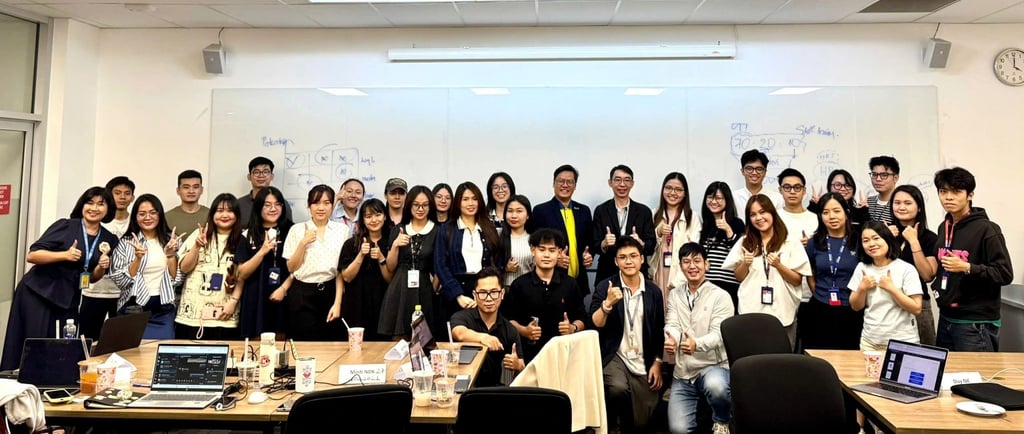
We were honored to have one of our experts return to RMIT University Vietnam as a guest speaker for the MBA class, delving into the pressing topic of 'Leading AI & Workforce Transformation.' The energy in the room was palpable, fueled by the engaged MBA students whose curiosity and sharp questions made the session not only informative but also profoundly inspiring.
The Transformative Power of Artificial Intelligence
In this enlightening discussion at RMIT University Vietnam, artificial intelligence (AI) emerged as more than just technology, it's a foundational force revolutionizing leadership, organizational structures, and talent strategies. As we prepare the next generation of leaders, AI stands out as an essential tool, no longer a fleeting trend but a pivotal driver shaping the future of work.
Adoption Frameworks and Real-World Applications
One of the highlights of the session was the exploration of practical adoption frameworks for integrating AI into businesses. For instance, frameworks like the AI Maturity Model help organizations assess their current AI capabilities and plan progressive implementation stages, while the CRISP-DM (Cross-Industry Standard Process for Data Mining) provides a structured approach to data-driven AI projects, emphasizing iterative cycles from business understanding to deployment. Additionally, a straightforward 7-step guide—starting with defining clear goals, assessing data readiness, and engaging stakeholders—offers businesses a roadmap to ensure AI initiatives align with strategic objectives and minimize risks. These tools empower leaders to move beyond hype and focus on scalable, value-driven AI integration.
The speaker shared numerous real-world success stories, illustrating how various organizations have effectively utilized AI to enhance their operational efficiency and decision-making processes. Take Amazon, for example, which leverages AI-powered inventory management to predict demand and optimize stock levels, reportedly reducing inventory costs by up to 15% while improving supply chain accuracy. Netflix uses AI algorithms for personalized content recommendations, driving user engagement and retention by analyzing viewing habits to suggest tailored shows and movies. Similarly, Starbucks employs AI for customer personalization, using data from its app to customize offers and menu suggestions, resulting in increased sales and loyalty. These examples demonstrate how AI can transform everyday operations into competitive advantages when applied thoughtfully.
Conversely, cautionary tales were also presented, prompting the students to consider potential pitfalls and challenges associated with AI implementation. A notable failure was Zillow's AI-driven home-buying program, which overestimated property values during market fluctuations, leading to significant financial losses and the layoff of 2,000 employees. Microsoft's Tay chatbot, released in 2016, quickly learned harmful behaviors from user interactions and had to be shut down within hours due to offensive outputs, highlighting issues with unchecked AI learning. More recently, Deloitte faced backlash over an AI tool that produced inaccurate outputs, underscoring the dangers of inadequate governance and testing, which can result in reputational damage and legal liabilities. These stories serve as reminders that without robust data infrastructure, ethical oversight, and iterative testing, up to 80% of AI projects risk failure.
As we look to the future, it becomes increasingly clear that tomorrow's leaders must master AI-driven innovations today. The discussion encouraged participants to not only envision the possibilities that AI presents but also to actively engage in developing the skills necessary for leveraging this technology effectively within their organizations. Understanding AI's implications on workforce transformation—such as automating routine tasks while upskilling employees for higher-value roles—is essential for any leader aspiring to drive change in this rapidly evolving digital landscape.
In conclusion, the session at RMIT University encapsulated the importance of preparing current and future leaders for the realities of an AI-infused workplace. Through passionate discussions, students gained invaluable insights into the dynamics of AI and its capacity to transform workforce strategies. This experience reiterated that the dialogue surrounding AI will continue to grow, demanding an ongoing commitment to learning and adaptation in leadership practices. We're excited to continue fostering these conversations and supporting organizations in their AI journeys.
ADDRESS
Level 2, Vietcomreal Building
Consulting
Training
Email: info@berisolutions.com
BeriS Ltd. Co. © 2024. All rights reserved.
68 Nguyen Hue, District 1, HCMC, Viet Nam